Learn what to do when QuickBooks desktop installation is stuck because of the ABS PDF drive issues:
Happen upon Installing ABS PDF driver … freeze error when installing QuickBooks desktop? Or witnessing errors such as the installer being frozen or has stopped responding when installing QuickBooks Desktop? Well, all these above-mentioned technical snags might happen as a result of a system issue or a slow internet connection. The QuickBooks accounting software uses the ABS PDF to print transactions, which makes it important for the component to be installed.
If you are also looking for a comprehensive guide to rectify ABS PDF driver issues in QuickBooks desktop, then going through this segment carefully will surely make some sense to you. Whereas, if you aren’t willing to perform the steps manually to fix the error, then in that case, we recommend you to connect with our tech geeks using our support line and ask them to carry out the necessary steps for you.
Why QuickBooks installation is stuck on installing ABS PDF drive?
The basic factors leading to freezing QuickBooks with Installing ABS PDF driver message or the installer being frozen are discussed in below:
A slow internet connection can be one of the basic reasons causing the error.
Any issue with the device itself can cause this problem.
Steps to fix Error: Stuck on "Installing ABS PDF driver..." while installing QuickBooks Desktop
You can implement any of the below measures so as to successfully tackle out the QuickBooks installation is stuck while installing ABS PDF driver message.
Step 1: Download and install the QuickBooks tool hub
Furthermore, open the file that was downloaded earlier, which might look like QuickBooksToolHub.exe.
Pay heed to the on-screen instructions for installing and Agreeing to the terms and conditions.
After the install process ends, you simply have to double click the Icon on the windows desktop for opening the QuickBooks tool hub.
Most importantly, in the event of not being able to spot the icon, search for the same in Windows for QuickBooks Tool Hub and choose the Program.
Step 2: Running Quick Fix My Program from the QuickBooks Tool hub
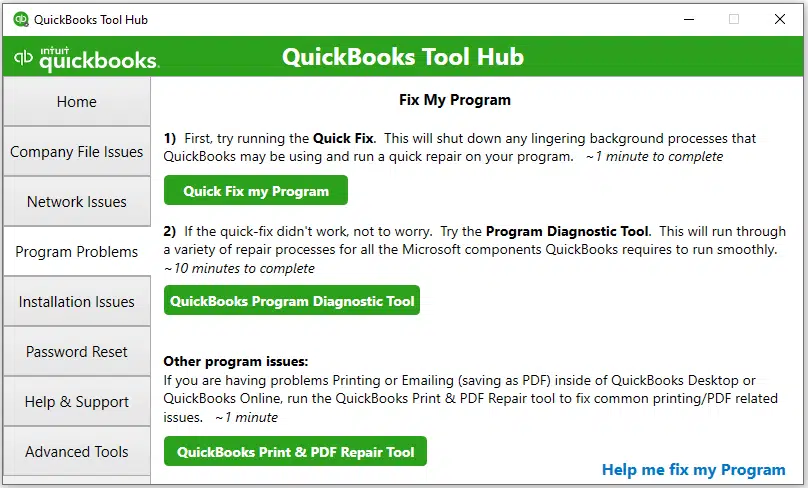
In tool hub program, go to the Program problems tab.
And select Quick fix my program.
Quick fix my program will take sometime to detect and fix the issue.
Once done, open Run command by pressing Windows + R keys.
Then type %TEMP% and hit Enter key.
After that look for Prx_usXXrX or Enterprise_usXXrX folder.
Please note that X’s on this folder indicates the version, year, and release of the QuickBooks.
Next step is to open the Third-party folder and also select ABS
Now double click on ABSPDF412Setup for running the file.
Once done with the installation process, open and register QuickBooks using the license key.
Just in case the ABS PDF installer continues to freeze or stops responding, then make sure to connect with an IT expert and get your system checked once.
Performing the set of steps that we have mentioned in above can really help in fixing the stuck ABS PDF driver error while installing QuickBooks desktop. In spite of that, if you aren’t able to get rid of the issue even after implementing the steps above, then in that case, connect with our QuickBooks error support team using our helpline i.e., 1-800-761-1787, and our tech support team will ascertain all your queries are answered immediately.
FAQ'S
What is the XPS driver?
The XPS driver is a printer driver that allows a computer to communicate with and control a printer that supports the XML Paper Specification (XPS) file format.
How do I fix QuickBooks PDF Converter?
You can try fixing QuickBooks PDF Converter by reinstalling the driver, repairing QuickBooks installation, or using the QuickBooks PDF & Print Repair Tool.
How do I fix missing PDF component in QuickBooks?
You can try fixing missing PDF component in QuickBooks by reinstalling the XPS Document Writer, repairing QuickBooks installation, or using the QuickBooks PDF & Print Repair Tool.
What is ABS PDF?
ABS PDF is a software that provides a virtual printer driver to convert documents to PDF format, allowing users to create PDF files from any application that has printing capabilities.
How do I change my default PDF viewer in QuickBooks?
You can change your default PDF viewer in QuickBooks by going to the Edit menu > selecting Preferences > choosing Integrated Applications, > clicking Company Preferences and selecting your preferred PDF viewer from the PDF viewer drop-down menu.
Learn how to export lists from the old company file into a new data file in 4 simple steps:
Exporting lists from an old company file into a new data file can be a bit tricky if you are new to QuickBooks. This article intends to provide you with detailed information for exporting lists from old QuickBooks company file into a new data file.
Important: We expect that you have an active QuickBooks Desktop payroll Subscription and you already have created a company file.
Important points you shouldn't avoid
Following are the pointers which you have to keep in mind before exporting lists from a old QuickBooks company file to new QuickBooks data file: So keep, read on:
These steps will only allow you to import lists. Batch Entry is a third-party software that allows you to move your transactions.
You can't import names or list items into your new file, if you have custom fields enabled. Before you import the file to the new one, delete the custom field information from the .IIF file. Once you import your lists, you will need to enter the custom field information again in the new file.
Your file will be damage or corrupt, if you try to import damaged lists into your new company file.
How you can export lists from old company file into a new data file in QuickBooks
Follow the steps provided below in the same order to get successful results.
Step 1: Export list
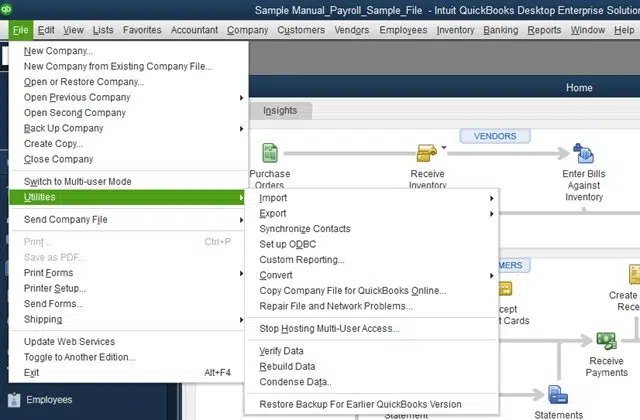
Go to QuickBooks File menu, and select Utilities, followed by Export and Lists to IIF Files.
Select the list that you have to export and click OK.
Now search the location where you want to store your file and click Save.
Things you should know:
Exporting the list from QuickBooks creates an .IIF file that can be opened on notepad or excel.
You shouldn’t Export the major lists (Item, Customers, Vendors) simultaneously but one at a time to keep from facing any issues caused by exporting very long lists.
Step 2: Clean up your lists (Optional)
Initially, you need to click on file and open the IIF file that you exported from your company file in Excel.
Open MS Excel.
After that, click on the File menu and select Open (Click on the Office Button Open if you're using Excel 2007).
Select the storage location where you saved the .IIF file.
In the file type field, select All Files.
Now select your IIF file, then click on Open.
Click on Next two times and then Finish in the Text Import Wizard. The IIF file will next open in MS Excel sheet.
Make the necessary edits in MS Excel.
Click Save to save all the changes you made to the IIF.
Go to File menu and hit a click on Save button (Click on the Office Button and then Save opt, if you're using Excel 2007).
Click Yes when prompted and exit Excel.
Next, you will be once again prompted to save the IIF file.
Click Don't Save.
Things you should know:
What should you clean up from the list?
Customers you no longer sell or offer services to
Vendors you no longer do business with
Ex-employees
Items that you have discontinued selling
Any other entries unnecessary in the new company file
Login into QuickBooks with admin credentials in single user mode and open the new company file.
Click on the File menu, and select Utilities.
Select Import and click IIF Files and Import the Chart of Accounts.
After that choose Import and hit a click on IIF Files.
After the Chart of Accounts is successfully imported, import the other list in the following order.
Import the lists that have no information in common with other lists such as,: Customer Type List, Vendor Type List, Class List, Job Type List, Payment Terms List, Payment Methods List, Shipping Methods List, Customer Message List, To Do Notes.
Import the lists one by one in the given order: Vendor/Supplier, Employee, Other Names, Sales Rep, Item, Price Level, Customer, and Budgets (follow the sequence).
Points to remember:
You can ensure a smooth import by following the instructions given above.
It is strongly recommended that you back up your company file prior to importing any lists. This will also be true after you have successfully imported one or two major list.
Step 4: Set up the opening balance
Here is how you can set up an opening balance for a bank, credit card, and other types of accounts.
1: Set up balance for bank or credit card accounts
Firstly, sign in to your bank's website or find a bank statement.
After that, open QuickBooks Desktop, go to Company menu and select Chart of Accounts.
Right-click anywhere on your Chart of Accounts and then click New.
In account type, select Bank or Credit Card and then click Continue.
Give a name to your account. If you have more than one account of the same type or with the same bank, save them with unique names so they're easy to distinguish.
Fill out the rest of the data fields and then select Enter Opening Balance.
Next, if you want to edit your opening balance, click the Change Opening Balance button.
2.: Asset, liability, and other types of accounts
Sign in to your bank's website or find a bank statement.
Open QuickBooks Desktop, go to the Company menu and select Chart of Accounts.
Right-click anywhere on your Chart of Accounts and then click New.
After that select Fixed Asset, Loan, or Equity and then click on the Other Account Types drop-down and one of the types.
Now select Continue tab.
Give a name to your account. If you more than one account of the same type or with the same bank, save them with unique names so they're easy to distinguish.
Fill out the rest of the data fields and then select Enter Opening Balance.
If you later on want to edit your opening balance, click the Change Opening Balance button. What you put in for your opening balance depends on how you want to handle your past transactions:
If it’s not needed to enter older transactions that come before the opening balance date in QuickBooks: Enter the last balance and date from your most recent bank statement and select OK. All your past transactions are now summarized, and you can start tracking new transactions from now on.
If you wish to enter your past transactions in detail: Select a date. You should select a date older than the oldest transaction you may want to track in QuickBooks. Your opening balance summarizes everything before the date you pick. Enter the date you chose in the Ending date field, and then in the Ending balance field, put in the balance of your real-life account for that date. At the end, select OK. This process would keep you from counting past transactions twice.
Now select Save & Close to record the opening balance.
We hope the above-given steps might be helpful for you in order to export lists from the old company file into a new data file. However, if you have any more queries or you need assistance with any QuickBooks-related issue, you can contact our certified QuickBooks error support experts. Reach us easily by dialing toll-free 1-800-761-1787. We will be more than happy to help you out with your accounting concerns.
FAQs
What are the benefits of exporting lists from an old company file?
Exporting lists helps users in saving their time, especially when a large quantity of data is to be transferred. Exporting lists also helps in bypassing data entry errors while making sure that the new data files are accurate.
What are the different lists that can be exported from an old company file?
The different lists that can be exported from an old company file encompass customer lists, employee lists, vendor lists, charts of accounts, inventory items, etc.
What file formats can be used for exporting lists?
While the lists can generally be exported in Excel or in the CSV format. However, other formats, too are acceptable.
Can I customize the lists before exporting them?
Yes! The lists can be customized before being exported. It implies that users have the prerogative to add, remove, or modify items.
What should I do if I encounter errors during the import process?
If users stumble upon any technical error while importing lists, they need to double-check the file format.
Discontinued features in QuickBooks Desktop 2022 and Enterprise 22.0 and their alternatives:
QuickBooks desktop 2022 and Enterprise 22 has come up with a lot of new features, but there are certain features discontinued in these versions. In this write-up, we have mentioned the features that didn’t make it into QuickBooks desktop 2022 and Enterprise 22.0. You might have noticed that with the launch of QuickBooks desktop 2022, features like loan manager, scan manager, and cash flow projector are no longer available.
Go through this segment with full concentration to find out the features that are no longer available in QuickBooks desktop 2022 and Enterprise 22.0. You can also connect with our tech support professionals, simply if you need any advice or guidance related to the same.
Below is a list of information that has replaced the earlier features in QuickBooks Desktop 2022:
Attach documents to your mobile
The scan manager feature was replaced with the attached documents. This feature continues to help you in scanning documents using a mobile device and then import the documents into QuickBooks.
Track loans in QuickBooks
It should be noted that the transactions like principal repayment and interest expense are not automated any longer. You will have to manually enter them in QuickBooks desktop 2022. You might need to know the principal and interest components for each of the payments. Further, you should refer to the amortization schedule provided by the lender. In case you aren’t able to obtain the schedule, then look for the amortization calculator online.
Search for QuickBooks desktop Marketplace
You should look for an alternative low-cost solution to cash flow projector in the QuickBooks desktop marketplace featuring third-party applications that are developed by independent developer partners.
If you want a complete article on QuickBooks Desktop service discontinuation policy then click here.
These were the information related to features discontinued in QuickBooks desktop 2022 and Enterprise 22. However, if you have any queries or concerns, then connect with our tech geeks using our support line i.e., 1-800-761-1787. Our dedicated QuickBooks support professionals will ensure to help you in finding out information related to discontinued features in QuickBooks desktop 2022.
Learn how to troubleshoot QuickBooks database related error code C=1304:
Bumping into some or the other error in QuickBooks desktop is pretty much common, as this software involves numerous codes and algorithms. Error C=1304 is another common error encountered within the QuickBooks Desktop? Due to the technical complexities involved in QuickBooks desktop software, this accounting software is prone to a myriad of errors. Today, we are going to discuss the QuickBooks error C=1304 and get to the effective measures for fixing this issue. This particular error involves Microsoft Windows operating system and appears when installing or updating the QuickBooks desktop.
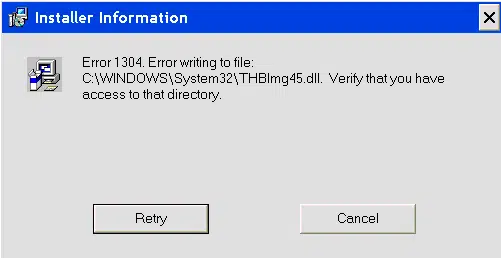
The error message that crops up on the screen will state as:
Installer information
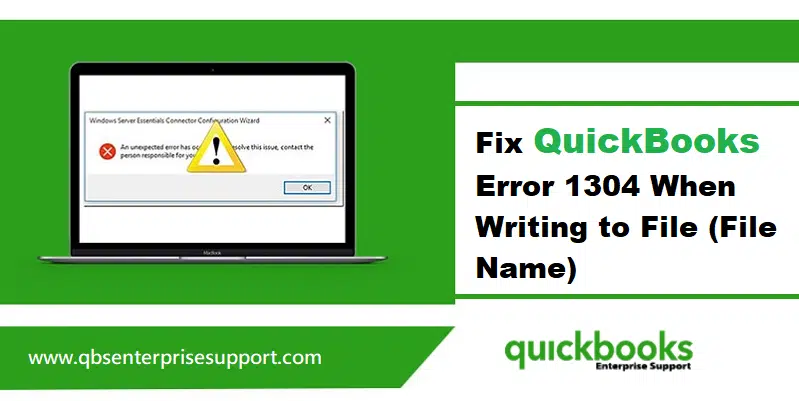
Error 1304. Error writing to file (filename).
C:\Windows\System32\THBImg45.dll. Verify that you have access to that directory.
Check that you have access to the directory. You might land up into such an error due to any error in the CD or the CD drive. Or in case the .net component is damaged. In order to learn other related facts to QuickBooks error code C=1304, you simply have to go through this piece of writing.
What triggers to QuickBooks error code C=1304?
The reasons behind error code 1304 in QuickBooks can be many. So, before you step ahead and start implementing the fixes for the same, make sure to check out the root causes of this issue.
Just in case there is any sort of damaged with the Microsoft .NET components, then in that case you might land up into such an error.
If the CD or disk gets damaged or the CD driver isn’t functioning properly.
Another common reason can be if the CD drive possesses any issues.
Some damage caused to the Windows files may also lead to QuickBooks Error C=1304.
Performing the below methods is recommended so as to fix the QuickBooks error C=1304.
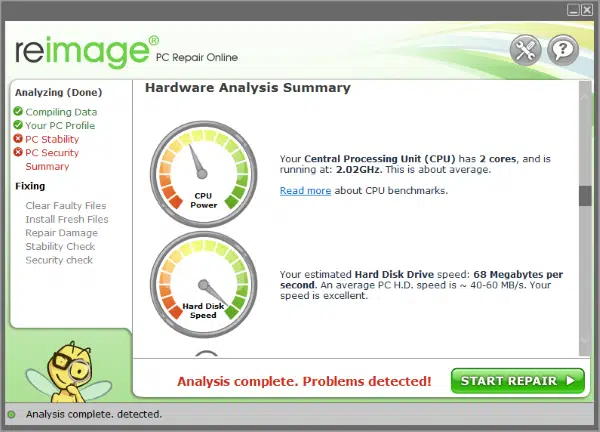
Method 1: Scan the system with reimage repair tool
Under this process, you are supposed to download reimage repair tool.
After that navigate to the file location and double click on the same. You might now see the user account control prompt “if your non-existence to control the program”, where you are supposed to click on yes tab.
You might see a welcome screen, where you need to ascertain that the checkbox remains unmarked in order to permit the repair tool to scan.
Further, you have to make sure that the internet connection isn’t broken, the reimage tool will install itself.
Moreover, the preliminary scan will also start.
Once your scan is complete, you will be able to learn the damaged sectors of the PC and would be able to repair it.
You now have to click on start repair tab in the bottom right corner.
Reboot the system when the repair process ends.
Method 2: Making use of installation CD to replace installation files
Herein, you would have to replace the installation files from the CD to hard drive.
Insert the QuickBooks CD into the CD drive. After the installation process begins, you would have to click on the Quit option.
Move to the C: drive, further create a new folder and also paste the files there:
You would have to opt for the desktop on the left pane of the window in windows vista, and also click on organize and also click on the new folder.
Once you are able to see the folder, you simply have to rename it to QuickBooks.
Right-click the QuickBooks CD and tap on Explore.
Find QuickBooks and other third-party folders and also the setup.exe file in the right pane.
You need to now press the ctrl key and select the folders and files.
Right-click and go for copy option.
Come back to QuickBooks and right click on it, and tap on Paste tab.
You are supposed to initially log in as the system admin.
After that, click on start tab and choose all programs > system tools > accessories and click on system restore settings.
Choose restore my computer to an earlier mature point.
Reorganize reduction from on the list, and click on modernize reduction list, and also hit Next.
Finally reboot your system once the restoration is complete.
Method 4: Repairing Microsoft components
To begin with, go to Control Panel from Start menu.
Then select Programs and Features tab.
Later on, click on Microsoft components one by one and right-click on Repair.
Follow the same steps for all the Microsoft components and then visit again in QuickBooks to check if repairing these components helped to get rid of this issue.
Note: If the above step not worked then, uninstall these components one by one and then re-install them from official website of Microsoft.
Winding up!
Fixing the QuickBooks error code C=1304 can be a little easy, once you are go thorough with the above stated set of steps. However, if for some reason you continue to stumble upon similar issue, then it is highly recommended to connect with our QuickBooks technical support team using our support line i.e., 1-800-761-1787.
FAQs related to QuickBooks Error C=1304
Can I use the QuickBooks Install Diagnostic Tool to fix this error?
Can damaged installation media cause QuickBooks Error 1304?
Yes! Corruption of the installation media due to a scratched installation disk could potentially result in such error.
What if I encounter QuickBooks Error 1304 on a network installation?
In case you stumble upon this error on a network installation, perform the below-given steps: 1. The user account should have sufficient permissions to access the network installation folder. 2. Inspect the network connection. The settings related to the some should be configured properly. 3. Transfer the QuickBooks installation files to the computer and subsequently try running the installation.
A complete guide to repair error code 1903 when you install QuickBooks Desktop:
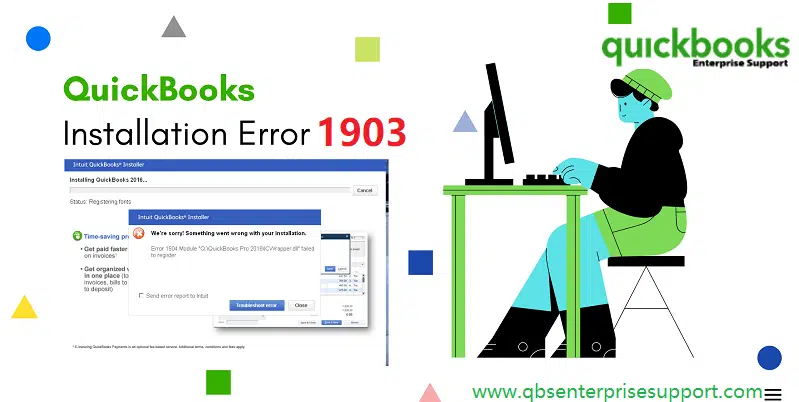
Trying to run QuickBooks, but aren’t able to? Or witnessing QuickBooks error code 1903 on the screen? Well, this particular error falls under the category of installation errors, the reason behind can be occurrence of such an error when trying to install the QuickBooks or when opening it after the installation of the software on the system. This error can be considered as a technical error and can also be categorized as a runtime error.
You might face a similar sort of issue as a result of .Net framework. Such sort of technical snags interrupt in opening of the program and might also freeze up the important work. The basic reason triggering this issue can be missing of some mandatory components or damaged Windows files. You can go through this segment with full concentration to find out the right solution to such an error.
What triggers QuickBooks error code 1903?
This particular error can be triggered due to the following factors:
Once you are thorough with the steps and procedures discussed in above, it becomes way easier to tackle through the QuickBooks install error 1903. On the contrary, if you are still not able to deal with such runtime issue, then in that case connect with our QuickBooks error support team using our dedicated helpline i.e., 1-800-761-1787. Our support guys will be more than happy to rectify the issue for you.
FAQs - QuickBooks Error 1903
What is QuickBooks Error 1903 and 1905?
Error 1903 and similar errors are an installation error encountered while setting up the latest updates for QuickBooks.
What causes QuickBooks installation errors?
The various causes behind Error 1903 are: 1. Inappropriate QuickBooks installation. 2. .NET Framework not functioning properly. 3. The Microsoft components required by QuickBooks are damaged. These include Microsoft MSXML and C++ files.
How to fix installation errors in QuickBooks?
The various methods to fix QuickBooks Error 1903 are: 1: Use QuickBooks Install Diagnostic tool 2: Update Window O/S. 3: Switch to Safe Mode with Networking. 4: Fixing Microsoft components manually.